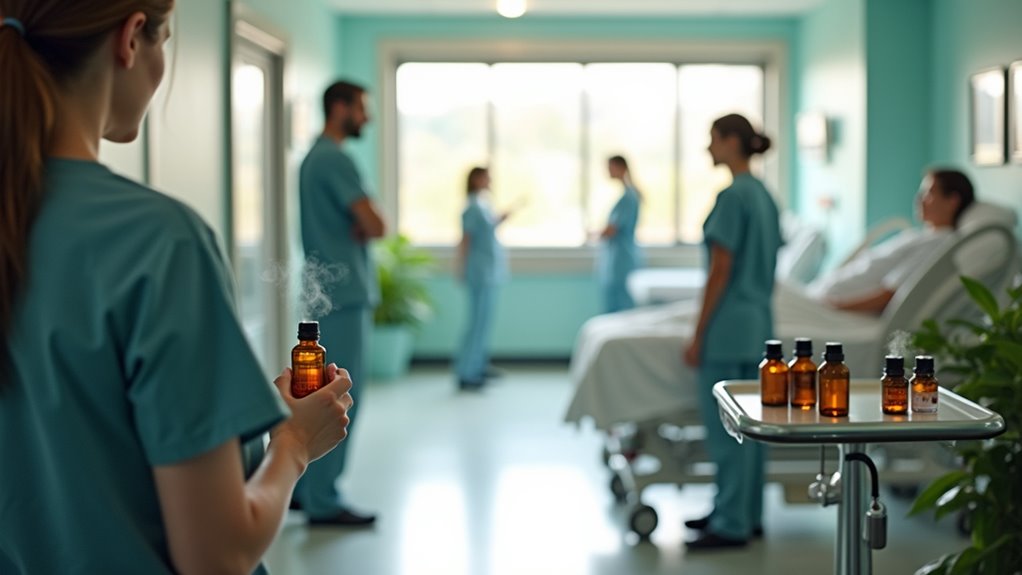
Vanderbilt ER made a bold move by introducing doTERRA essential oils into their healthcare setting, and the results were remarkable. Staff stress dropped from 41% to just 3%, while frustration levels plummeted from 60% to 6%. Even skeptical employees became advocates as the hospital atmosphere transformed almost overnight. Patients noticed too, appreciating the pleasant aromas that replaced typical clinical smells. The quality of oils matters, though – proper selection guarantees this wellness approach stays safe and effective.
Some of the links in this article may be affiliate links. If you make a purchase through these links, we may earn a small commission at no extra cost to you. Thank you.
The Aromatherapy Experiment: How Vanderbilt ER Transformed Its Environment
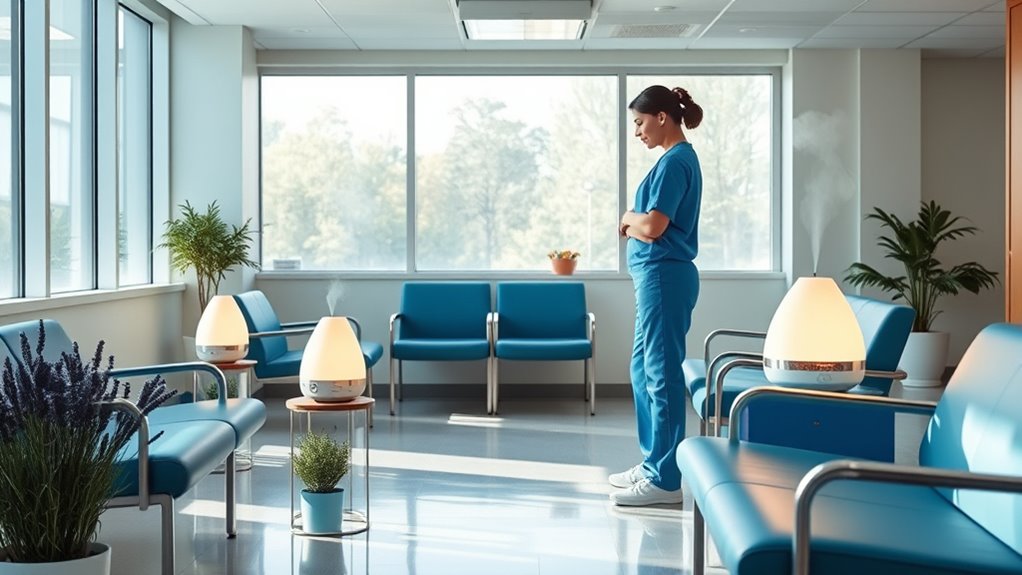
When Vanderbilt Hospital’s emergency room first introduced aromatherapy using doTERRA essential oils, many staff members rolled their eyes.
I mean, who’d believe a few scents could really make a difference? But the results were surprising.
Diffusers throughout the department dispersed essential oil blends like wild orange, lime, and citrus bliss, transforming the hospital ambiance almost overnight.
Staff frustration plummeted from 60% to just 6%!
What’s fascinating is how quickly skeptics became believers.
Even the most doubtful minds tend to shift when faced with undeniable results.
Even I was shocked that 84% of staff reported a more positive work environment.
The use of essential oils, such as lavender oil, has been shown to create a comforting environment that can reduce stress and enhance overall wellness.
Sometimes the simplest solutions—like changing how a place smells—make the biggest difference.
Surprising Results: Staff Stress Reduction and Mood Enhancement
Although I expected some minor improvements, the dramatic shift in staff mood and stress levels left me genuinely astonished.
The numbers tell an incredible story – staff reporting stress plummeted from 41% to just 3% after implementing aromatherapy! Frustration levels showed an even more dramatic drop, from 60% down to 6%.
I’ve seen plenty of workplace stress management initiatives come and go, but this one actually worked.
What’s most impressive is that 84% of staff agreed the essential oils created a more positive environment. Many even became advocates, bringing mood improvement techniques home with them! Incorporating essential oils like lavender can significantly enhance relaxation and promote better sleep quality.
From Skeptics to Advocates: How Staff Perceptions Changed

Despite initial resistance, the transformation in staff attitudes toward aromatherapy was nothing short of remarkable.
Despite skepticism, our staff’s dramatic shift in perspective on aromatherapy revealed the power of firsthand experience.
When we first introduced the essential oil diffusers, I noticed eye rolls and skeptical glances. But after experiencing the benefits firsthand, many former critics became our biggest champions.
Staff engagement soared as team members shared their positive experiences. Some even started using oils at home!
We implemented aromatherapy training sessions that, I think, really helped everyone understand the science behind it. It’s fascinating how quickly perceptions shifted from “this won’t work” to “can we get more diffusers?” Their journey from skeptics to advocates speaks volumes.
In addition, many staff members began to recognize the power of essential oils for emotional balance, which further fueled their support for the initiative.
Patient Experience: The Impact of Scent on Hospital Stays
The staff weren’t the only ones noticing the difference in our aromatherapy experiment. Patients frequently commented on the pleasant environment—quite a change from the typical hospital smell they’d expected.
In my experience, scent therapy has been a game-changer for patient comfort.
One elderly woman actually told me, “I was dreading coming to the ER, but it smells… nice in here?”
I think the citrus oils have been particularly effective. They don’t just mask odors—they transform the space. The hospital feels less clinical, more human.
And when patients are already anxious, well, isn’t that exactly what they need? The inclusion of lavender’s sleep-enhancing properties can also create a more calming atmosphere, further promoting relaxation.
Quality Matters: Essential Oil Selection and Safety Considerations
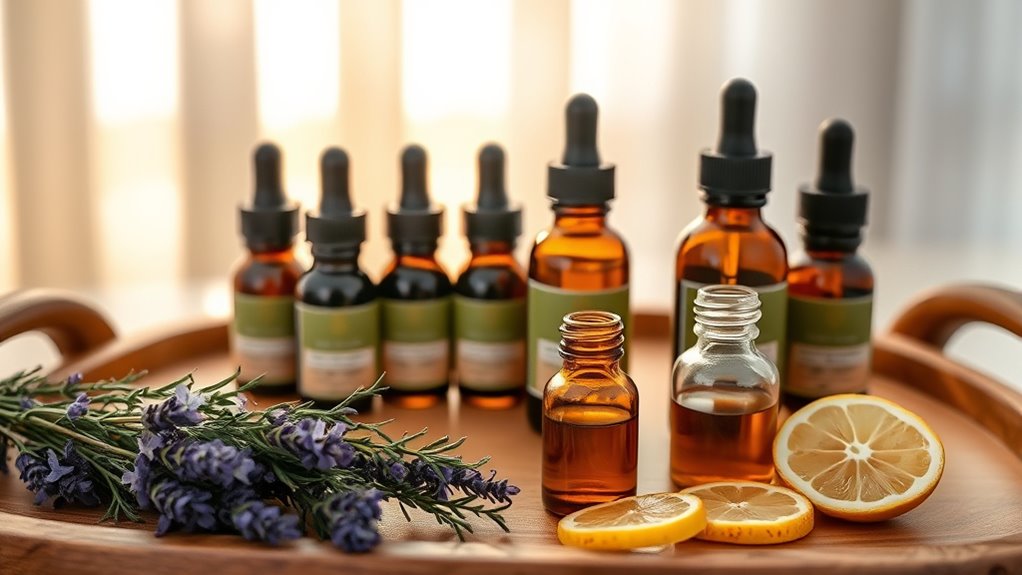
Safety concerns must be addressed when implementing aromatherapy in healthcare settings like ours. I’ve learned that not all essential oils are created equal, and sourcing standards make a huge difference. When we selected oils for our ER, we insisted on seeing GC/MS reports to verify oil quality. Some patients and staff might experience sensitivities or allergic reactions. Actually, we found that—wait, let me rephrase that—we discovered that diffusing for just 10-15 minutes per hour works best. It’s like medication dosing; more isn’t always better. I think proper dilution is non-negotiable when applying oils directly to skin. Additionally, lavender oil’s effectiveness in enhancing relaxation highlights its importance in our aromatic practices.
The Future of Aromatherapy in Healthcare Settings: Expanding the Practice
Based on our success with aromatherapy, I’m convinced that we’re just scratching the surface of what’s possible in healthcare settings.
The future applications are incredibly promising—from integrating essential oils in recovery rooms to customized scent protocols for specific patient needs.
Looking ahead, we’ll see essential oils in recovery rooms and personalized aromatherapy treatments tailored to each patient’s unique health journey.
What excites me most is the potential for holistic integration across entire hospital systems, not just ERs.
I think we’ll eventually see aromatherapy become, well, as standard as hand sanitizer stations.
While we need more research—and trust me, we’re working on that—the path forward is clear: aromatherapy isn’t just a nice-to-have; it’s becoming essential to modern healthcare. Proper storage of essential oils will be crucial to maintaining their therapeutic properties as we expand their use in these settings.
Conclusion
I never expected essential oils would revolutionize healthcare, but Vanderbilt’s results speak volumes. Just last week, nurse Jamie told me she went from dreading shifts to feeling energized throughout her 12-hour rotations. I’m convinced aromatherapy isn’t just some wellness trend—it’s a practical tool for creating healthier hospital environments. As more facilities adopt these practices, we’ll likely see improvements in both staff retention and patient satisfaction.
About The Author
